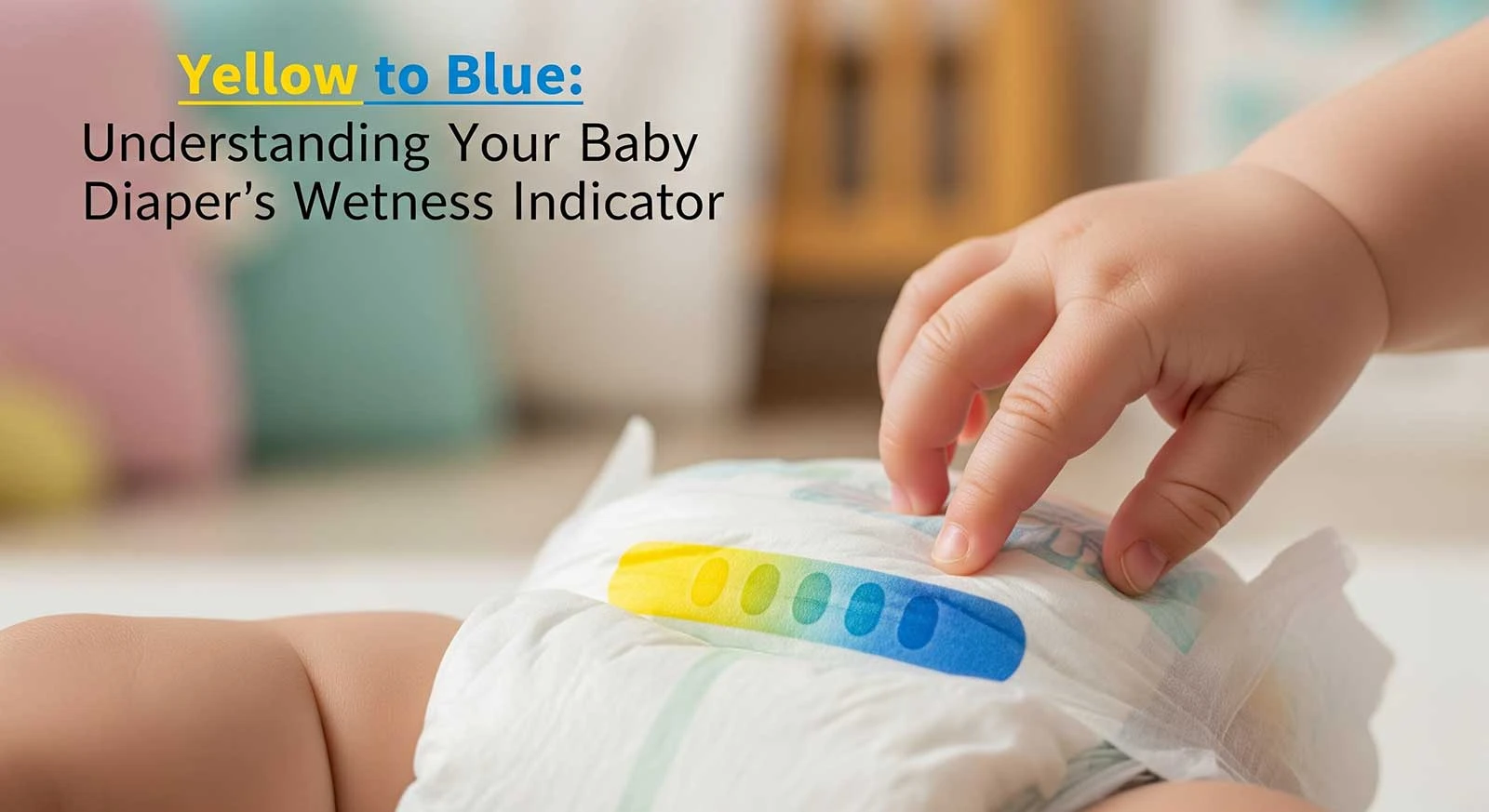
For first-time parents, the wetness indicator is a simple yet revolutionary feature found on most high-quality newborn and infant disposable diapers. It’s the yellow line running down the center of the diaper that magically changes color—usually to blue or green—when exposed to moisture.
But what exactly is it, and how should you use it?
The indicator line is treated with a chemical that is sensitive to changes in pH (acidity), such as those caused by urine.
It is important to note: This feature reacts to urine/moisture and is not designed to indicate a bowel movement (poop). You must always check the diaper's contents manually after your baby has had a bowel movement.
While seasoned parents can often tell if a diaper is wet by sight, smell, or a slight droop, the indicator is a crucial tool for the following reasons:
Quick Tip: The line turning blue does not mean the diaper is full. High-quality diapers are designed to absorb much more. The indicator simply confirms the diaper is wet. For older babies, you can usually wait until the line is fully coloured and the diaper feels slightly heavy before changing.





You need to Sign in to view this feature

This address will be removed from this list
 english